Turn Your Dreams Into Reality
Whether buying, refinancing or investing, Equity Stream can help!
Why Equity Stream?
Since founding Equity Stream Financial, we have successfully facilitated approximately $5 million in private mortgage lending to borrowers across Canada. We recognize that traditional bank criteria don’t always account for the complexities of real-world financial situations.
By leveraging our deep network of private capital, we provide a vital bridge for clients who need flexible, common-sense solutions—whether they are navigating a unique property type, rebuilding credit, or moving quickly on a time-sensitive investment.
For us, this milestone isn't just a number; it represents dozens of families and investors who were able to secure their foundations and move forward when the big banks said no.

Purchase
Purchasing a new house, condo, vacation home or commercial property? Let us help you from search to close

Renewal
Worried about interest rates? Not sure what your bank will do? Let's explore all your options.

Refinance
Want to lower your monthly payments? Need to get at some locked up equity? Let's talk solutions

Debt Consolidation
High credit card debt? Overextended? Let us help get you into a lower payment!
What path is right for you?
There are many different ways we can help you depending on your current situation.
Smart Renewals. Strategic Refinancing. Expert Advice
Your mortgage should work for your life. Whether you are purchasing a new home, securing the best rate at renewal, or refinancing to renovate or consolidate debt, we offer personalized advice to ensure you make the right move. We help you navigate the current market to maximize savings.
Turn Your High-Interest Debt into Home Equity
- Stop Juggling Payments: Consolidate high-interest credit cards and loans into one simple, lower-rate mortgage payment.
- Boost Your Cash Flow: Free up monthly funds to cover living expenses or save for the future by reducing your total monthly interest costs.
- A Clear Path Forward: We help you design a structured plan with a fixed pay-off date to regain complete control of your finances.
| Debt Type | Balance | Interest Rate | Monthly Payment |
|---|---|---|---|
| Credit Card A | $10,000 | 21.99% | $450 |
| Credit Card B | $8,000 | 19.99% | $350 |
| Unsecured Personal Loan | $12,000 | 14.50% | $480 |
| Total (Current Debt) | $30,000 | ~18.5% (Avg) | $1,280 |
| Consolidated Mortgage | $30,000 | 4.99% | $175* |
*Based on a 25-year amortization. While the term is longer, the immediate monthly savings is $1,105.
Custom Lending Solutions When Banks Say "No."
Traditional lending doesn't always fit your unique story. Our private mortgage options provide a strategic bridge, focusing on your home equity rather than just a credit score. We offer flexible, short-term solutions designed to help you secure your property today while we build a plan to transition you back to traditional financing tomorrow.
Private lending is designed for borrowers who have strong equity or a significant down payment but don't fit into a traditional bank's "checkbox" requirements. You may qualify if you are:
- Self-Employed or a Business Owner: You have a successful business but your tax returns don't reflect your true gross household income due to write-offs.
- Navigating a Credit "Reset": You are in the process of rebuilding your credit after a life event like divorce, illness, or a past bankruptcy.
- A Property Investor: You need to move quickly on a "fix-and-flip" or an unconventional property that traditional banks won't finance.
- Facing Urgent Deadlines: You need bridge financing to close a deal quickly while waiting for a traditional bank approval or the sale of another property.
- New to Canada: You have the funds for a down payment but lack the Canadian credit history that major banks require.
- Consolidating High-Interest Debt: You want to use your home’s equity to pay off tax arrears or high-interest collections to stabilize your monthly cash flow.
Unlike banks that focus on your T4s, private lenders primarily look at:
- Equity/Down Payment: Typically a minimum of 15% to 25%.
- Property Value: An appraisal to confirm the home’s condition and marketable value.
- Exit Strategy: A clear 1-to-2-year plan for how you will eventually refinance back to a bank or sell the property.
Frequently Asked Questions
We know you have questions! So we have answers!
1 How much can I afford to pay?
To determine how much home you can afford, you must calculate your taxable income, outstanding debts, and monthly payments. Lenders typically use two primary ratios—Gross Debt Service (GDS) and Total Debt Service (TDS)—to establish your maximum, taking the lower of the two as your limit.
- Calculate Your Lender-Approved Limits (39/44 Rule)
- GDS Calculation (Max 39%): Calculate 39% of your gross monthly income. This amount must cover your mortgage payment, property taxes, heating costs, and 50% of any condo fees.
- TDS Calculation (Max 44%): Calculate 44% of your gross monthly income. This amount must cover all housing costs (from the GDS calculation) plus all other monthly debt payments (car loans, credit cards, lines of credit).
- The Limit: Lenders will use the lower of these two calculations to determine your maximum allowable monthly housing expenses.
- Calculate Your Personal Comfort Level
- Avoid Being "House Poor": Just because lenders approve a certain amount does not mean you should spend it. If you feel comfortable with a payment lower than the 39% GDS limit, settle for that amount.
- Lifestyle Budgeting: Ensure you have enough left over for simple luxuries, savings, and emergencies so your entire budget isn't consumed by your home
2 What is Mortgage Loan Insurance?
Mortgage default insurance (often called CMHC insurance) is mandatory in Canada for high-ratio mortgages (down payment <20%, or Loan-to-Value >80%). It protects lenders if the borrower defaults.
Providers include CMHC (a crown corporation), Sagen (formerly GE Capital), and Canada Guaranty. Premiums range from roughly 0.60% to 4.00% of the loan, paid by the borrower, and can be added to the mortgage.
- Purpose: Required by law to insure lenders when down payment is less than 20%.
- Premiums: One-time cost based on loan size, usually added to the mortgage principal.
- Requirement: Mandatory for high-ratio mortgages; not available for home prices over $1,500,000.
- Limitation: It protects the lender, not the borrower, and is distinct from mortgage life insurance.
- Costs: Provincial Sales Tax (PST) may apply to the premium in certain provinces, which cannot be added to the mortgage loan
3 What is a conventional mortgage?
A conventional mortgage in Canada is a low-ratio loan with a down payment of 20% or more of the purchase price (or appraised value), resulting in a loan-to-value (LTV) ratio of 80% or less. Because the lender assumes less risk, mortgage default insurance is not required, which eliminates extra premiums, although a stress test is still mandatory.
4 Can I use gifted funds?
Most lenders accept immediate family gifts (parents, siblings, grandparents) for down payments, requiring a signed gift letter confirming funds are not a loan. While CMHC often requires funds to be in the purchaser’s possession before approval, insurer policies can vary. Notably, many insurers now allow funds to be verified at closing rather than before application submission.
5 Can I use my RRSP to buy my first home?
As of April 2026, the Home Buyers' Plan (HBP) has been updated to allow first-time homebuyers to withdraw up to $60,000 from their Registered Retirement Savings Plan (RRSP) tax-free to finance a down payment. The HBP is administered by the Canada Revenue Agency (CRA).
- Withdrawal Limit: Individuals can withdraw up to $60,000 ($35,000 previously).
- Couples/Joint: If purchasing with a spouse or partner, both individuals can each withdraw $60,000, allowing for a total of $120,000 from RRSPs for a down payment.
- Tax Impact: The withdrawal is tax-free, provided it is repaid within the required timeframe.
- Eligibility: Generally for first-time buyers (or those who have not owned a home in the past four years). Funds must be in the RRSP for at least 90 days.
- Repayment Timeline: You have up to 15 years to repay the withdrawn amount to your RRSP.
- Start Time: Repayments typically start in the second year following the year of withdrawal. For example, if you withdraw in 2026, you begin repayments in 2028.
- Minimum Payments: The CRA requires annual repayments. If you fail to repay the minimum amount, it is included in your taxable income for that year and you will pay income tax on it.
6 What are other costs when purchasing a home?
Costs associated with buying a home—often called closing costs or transaction fees—typically range from 1.5% to 4% of the purchase price, covering mandatory expenses beyond the down payment. Key upfront costs include land transfer taxes, legal fees ($900–$2,500+), home inspection ($400–$700), and mortgage default insurance if the down payment is under 20%.
Key Costs Associated with Buying a Home
- Down Payment: Typically 5%–20%+ of the purchase price.
- Land Transfer Tax (LTT): Often the largest cost (percentage of property value). Cost depends on where you live.
- Legal Fees and Disbursements: Lawyer fees for title transfer and closing.
- Mortgage Default Insurance (CMHC): Mandatory if the down payment is less than 20%.
- Home Inspection Fee: $400–$700 to evaluate the home’s condition.
- Title Insurance: Protects against losses from defects in the property title ($300–$800).
- Appraisal Fee: $300–$800 to estimate the home's value for the lender (cost is subject to location).
- Property Tax/Utility Adjustments: Reimbursement to the seller for pre-paid taxes or utilities.
- HST/GST: Typically applies to new (but can be reimbursed), but not resale homes.
- Moving and Setup Costs: Costs to move and connect utilities
7 Is a shorter or longer term better?
A longer-term mortgage (4, 5, or 7 years) is an excellent choice if you have a busy life and want to avoid watching fluctuating mortgage rates, offering stability as many borrowers face payment increases. Locking in now lets you secure a fixed rate, shielding you from potential rate increases anticipated later in 2026.
Alternatively, if you want to keep your mortgage flexible or believe rates might drop further, a shorter-term (2 or 3-year) mortgage allows you to renew sooner and potentially capitalize on lower rates, though this comes with higher, more frequent renewal risks.
Key Considerations...
- Longer-Term Stability: A longer term offers payment certainty
- Shorter-Term Flexibility: 3-year fixed rates are being considered for more flexibility, as they allow for a potential rate decline in the future.
- Penalty Risk: Lawyer fees for title transfer and closing.
Ultimately, selecting the right term depends on your comfort level with risk and your anticipation of whether rates will rise or fall.
8 How does Bankruptcy affect borrowing for a mortgage?
Bankruptcy does not necessarily disqualify you; many lenders offer mortgage options tailored to your specific situation.
Have a questions that wasn't answered? Contact us to discuss!
ContactTestimonials
What others are saying
We were drowning in high-interest credit card debt and felt like we’d never get ahead. After one meeting, we had a clear plan to roll everything into our mortgage. Our monthly payments dropped by over $1,000, and for the first time in years, we can actually breathe again. It was life-changing.
I have used Equity Stream Financial services over the past few years and have been the recipient of exceptional service. Their diligence and perseverance to assist when I didn't think anyone could, brought about unexpected and positive results. They work tirelessly to ensure that my mortgage was secured during the most stressful of circumstances; and did not stop until it was accomplished. Trustworthy, reliable and pleasant personality. Knowledgeable in the field, they are someone you can count on to look after your best interest. I highly recommend Equity Stream Financial.
The service and personal attention we received from Nadia was exceptional and beyond what we expected! Her professionalism and knowledge of the industry was impressive and truly appreciated. Her commitment in finding us the best rate helped us in our search for our dream home. As first-time home buyers everything was new to us and the most important thing we wanted was someone we could trust. She was there for us every step of the way. I'm glad we chose her services and would recommend Nadia to anyone buying/financing a home.
Being self-employed, the big banks made me feel like I wasn't 'qualified' for a home, despite having a successful business. This team looked at the big picture and used my home’s equity to secure a private mortgage in record time. They didn't just give me a loan; they gave me a path to future bank financing."
My bank sent me a renewal offer that felt high, but I didn't think I had other options. I'm so glad I reached out! They negotiated a rate 0.65% lower than what the bank offered and handled all the paperwork. I saved thousands over my next term without any of the stress.
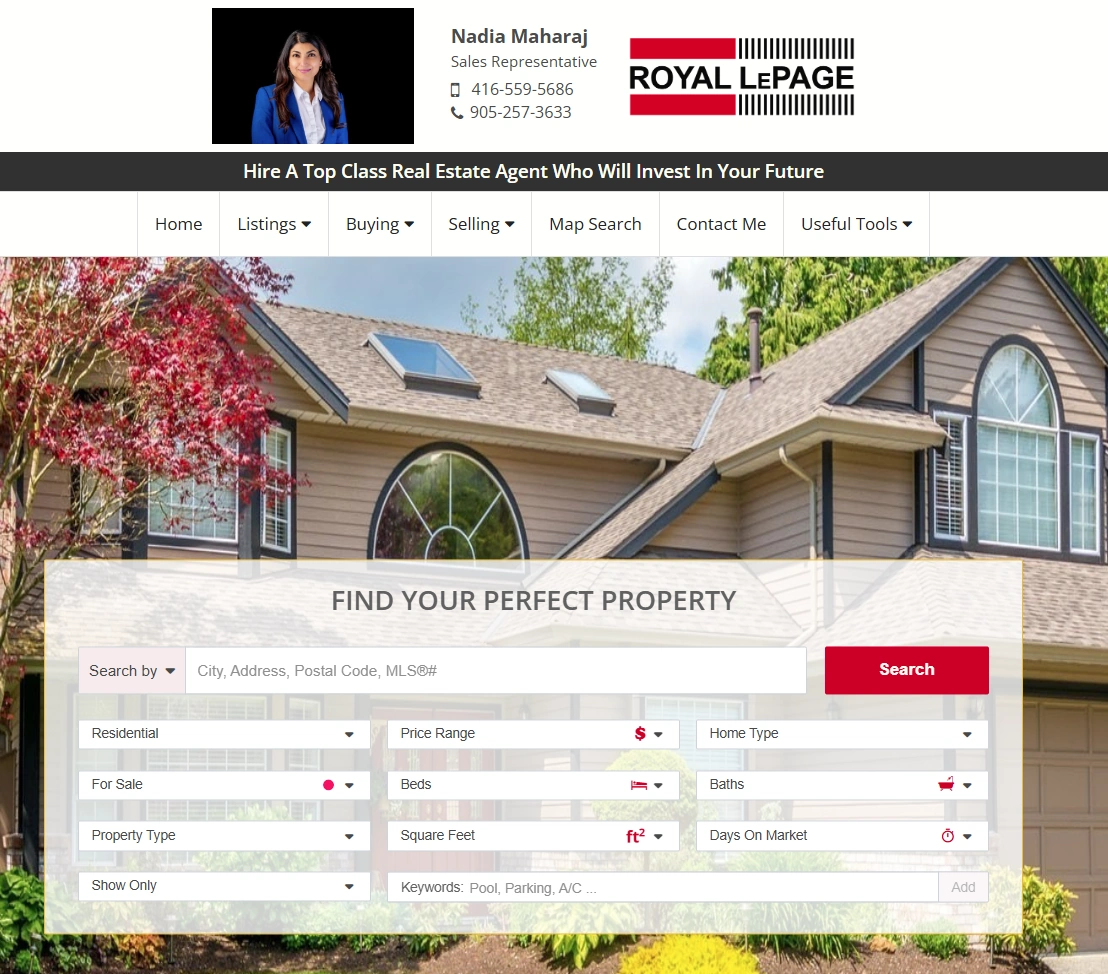
Still searching for that perfect house or property?
Jump on over to my dedicated real estate site and find it today
Contact
Borrowing or Lending, contact me to discuss how I can help
Location
1901 Harwood Ave N, Unit 30, Ajax, ON L1T 0K8
info@equitystream.ca
Call
(905) 493-4360
Open Hours
Monday-Friday: 10AM - 5PM
Saturday-Sunday: Closed